Posted in Fiction, Life, Writing

List 3 Books That Have Had An Impact On You..Why?

To choose only three makes this a challenge. I would probably have to go with The Lion, the Witch and the Wardrobe by C.S. Lewis for the first one. A teacher read it aloud to us in the fifth grade I believe and I think it was the first fantasy book I was exposed to unless you count television where I had seen cartoons of The Hobbit and The Last Unicorn. And a cartoon of The Swan Princess that made me fall in love with Tchaikovsky. I haven’t been able to find this cartoon, there is a newer version that isn’t it, but this one had a haunting melody of Swan Lake, which also reminds me of The Last Unicorn, it wouldn’t surprise me if my mind didn’t combine the two to create a cartoon that never existed, because my memories as a child were very fluid and were rarely accurate. I seemed to live in a fantasy most of the time so telling what was real and what wasn’t is hard for me.

The second book would have to be Dragonriders of Pern my Anne McCaffery. I got it in the library when I ran out of Margaret Henry horse books to read, I loved Misty of Chincoteague, so that would have been my first foray into science fiction. Following that I would go on to discover Andre Norton and Ursula K LeGuin, and eventually, Jack Vance and a whole bunch of amazing writers.

The third book I am going to go with Les Miserables by Victor Hugo, because it made me feel like I could read anything, it was the unabridged edition. It was a very thick volume, and ignited a love for classical literature and a fortitude to read to the end no matter the size of the book. It also taught me what not to do, because there are spots where it is difficult for a modern reader, and I know what doesn’t work and what does. Even great writers can make mistakes.

This was a tough call, because a lot of books have influenced me greatly. Jack Vance’s Lyonesse, George RR Martin’s A Game of Thrones, Ursula K LeGuin’s The Left Hand of Darkness, Mary Shelley’s Frankenstein, Bram Stoker’s Dracula, which I read also in the fifth grade and did a book report on, Sir Thomas Mallory’s Le Morte D’Arthur, my love for Arthurian legends, and Roger Zelazny’s Chronicles of Amber. Cj Cherryh’s Cyteen. And many, many more. I could keep going.

I used to peruse thrift stores for old sci-fi fantasy books, anything with Del Rey, or Ballantine, or DAW, or Fawcett, or Tor. I had old editions of the Lord of the Rings from the 60s, a copy of 1984 from the 50s and Dune by Frank Herbert from the 70s. All of these are gone because I couldn’t go through my books when I moved and had to get rid of them in a hurry.

I still have my 60s copy of the Silmarillion because it was in my purse at the time. But that is it. I feel the loss everyday, wish I could have planned more and panicked less. But the past is the past, and I have the memories and can find the stories easily enough.

Daily writing prompt
List three books that have had an impact on you. Why?

Posted in Fiction, Uncategorized, Writing

A Flower’s Revenge – A Dark Fairy Tale

Luscia of the spring morn, skin as fair as milk, with braids of gold down to her waist, wearing a silly dress of sky blue, was walking to town in her clumsy wooden shoes. She hummed off key, and kicked a pebble or two.

She had a basket of bread and cheese for lunch, as well as a few coins for some pretty bauble she might find. She stopped to pick some flowers, and proceeded to dismember them, and laugh uproariously at their fate.

Luscia began to collect a few to keep intact in a small blue vase in her window. She hoped they would keep their freshness and smell until she got home. Her armload got larger and larger until it was filled with various flowers and weeds.

She heard a rustle in the tall grass of the meadow, and had to stop, arms full of flowers for her vase, and her pleasure. She looked toward the noise, her tune now forgotten upon her lips. A red fox poked its head out of the grass briefly, and fled from the silly blue-eyed girl in the sky blue dress.

The girl followed the vibrant red till it was gone. Luscia let her flowers go for this new treasure, and ran after the fox giggling mischievously.

Luscia followed  the path easily at first, and began to hear the tumble of a brook or a stream. She went on a ways and soon the water became evident. The girl looked down at her wooden shoes in disgust; the bank of the stream was muddy and now so were her shoes. She looked to her pretty favorite dress and realized with dismay that she had gotten mud speckles on it as well.

Luscia’s mother was normally a very sweet lady, and would give her girl a piece of taffy if she were especially good. From the girl’s past experiences however, muddied clothes changed her mother into a demon of a woman, who was as likely to take the large wooden spoon in the kitchen to her behind.

Luscia was then at a crossroads. She truly wanted to follow the fox, but then she had muddied her dress all ready. There might still be time to go back home with her bread and cheese and the coins, and somehow win her mother’s forgiveness.

How to do that? Luscia came  up with no clear plan of action, which made her decide to follow the fox further. Her mother would be mad anyway, so she might as well continue on this path.

Luscia took a deep breath and started to walk forward considering herself brave. Soon, the girl began to be silly again, and started jumping and singing songs. Before she knew it, a root had caught her wooden shoe and she fell face forward into the briars on her right side. Oh, what a howling she started after that. If the fox had still been near that would have been his cue to run further away.

She cried as she pulled herself out of the brambles and brushed the debris from her dress. Now she was dismayed. Her dress was now covered with berry stains and dirt, and was torn in several places. It would need mending as well as cleaned.

The girl knew for certain that her mother would be angry at her now. She decided to continue to follow the stream, which she fancied would lead her to the elusive fox.

Luscia walked on, but caught no sight of the fox. It occurred to her then, that he might not be following the stream like her, and that he might have heard her cry in the briars.  She looked around her and saw that she was deep in a wood, and that it had gotten darker, much darker than when she had last looked toward the sky.

The girl heard her stomach rumble loudly, and glanced at the basket still on her arm, almost forgotten like the flowers she had long since dropped.

Lusica sat down on a nearby log, and contented herself momentarily with a piece of bread and cheese. She supplemented this with some choice blackberries and soon felt satisfied. The only thing she could wish for would be a cold jug of milk, and the red fox of course.

Luscia had been cheerfully thinking by the moment, and it now looked quite dark. She looked around her, and knew she had no idea where she was, nor how she would get home. The happy girl began to get afraid for the first time, and this feeling steadily increased, as she remained sitting on the log, terrified of the prospect of how to get home.

The fox was now finally forgotten, but it was too late for Luscia.

She cried out of fear and loneliness and wished she hadn’t strayed from the road to town with her basket. She tried to smooth out her ruined little dress, crying over the tears in it, and the dirt smudges on it. She stopped a moment, hearing another rustling noise in the nearby bracken.

The girl held still, and became quiet. In the daylight the rustle had been an adventure starting sound, at night in the dark woods the rustling took on a much darker meaning in her young mind.

She began to tremble, and debated internally whether she should run or stay where she was. The rustling became louder. The girl couldn’t sit on the log any longer. Luscia got up quickly, and began to run. Her wooden shoes stopped her again, and she tripped and fell to the ground a few feet from the log where she had sat.

The rustling had stopped and something now padded up to her. She saw no red, she could hardly see a thing it was so dark. She stumbled up, and discovered that her ankle hurt intensely. She had no time to think about it much, she threw off the remaining  wooden shoe and began to run barefoot. The thing lashed out, and she felt animal teeth bite into her foot. She yelled. She ran with a new purpose, and much faster than she had ever before.

The thing could be heard following her whenever it broke a twig on the ground, or if it went briefly into the bracken. Otherwise, the girl couldn’t hear it over her own harsh breathing and barely stifled sobs of pain.

She couldn’t see where she was going even, only going on, forward into more darkness, away from the thing.

It followed closely, but hung back a ways, as if it were waiting for something. The girl dropped her basket thinking maybe the cheese would distract it from pursuing her. This thing, whatever it was, didn’t seem to hesitate much over cheese,  because she could now hear it panting off to her left somewhere.

This creature of the night was obviously much faster than Luscia, and she knew it, but it wasn’t over eager to catch her and she didn’t know why. Perhaps, it was simply waiting for her to tire; perhaps it was waiting for more things to arrive. She shivered at the thought. This was no fox. Foxes didn’t go after children. Not even naughty ones. She had the name of it on her tongue, but dare not say what it was, although in her child’s heart she knew it very well.

She could dimly feel the many cuts on her feet, and the scratches on her arms, and even her face where a tree punished her lack of vision with the scrape of a low hanging branch.

Her sky blue dress was now in tatters, but she had no time to mourn it. Her long gold braids slowed her down too, getting tangled here and there, and she felt the pain when a chunk of it was yanked free from her head while she was running.

Luscia began to feel her energy waning, and although she tried not to slow down, it became difficult to keep her legs moving. She began to trip over her own bloody feet without the aid of her cursed wooden shoes.

The thing was hovering about her now. It moved in briefly, taking a jab at her with its white animal teeth. She fell. She could feel it now, as it tore at her bloody feet. Her terror made her scream, and then she went limp with fear. Her child’s heart gave way to its death, and she lost consciousness and never awakened to her dismemberment by the creature.

Luscia’s mother went in search of her child when night fell, but she went to the town, not the woods, and asked the baker if he had seen her, knowing that Luscia had some coins and had a liking for sweets.

He hadn’t seen her, and neither had the hat seller. Luscia always took a look at the hats, although she never had enough to buy one. Her mother returned home reluctantly, filled with sadness and anxiety.

Soon, the town had almost forgotten the little girl known as Luscia as the days went by. Tatters of sky blue cloth and a muddy wooden shoe were all that were ever found.

Her mother never did forget of course, and some of the other children were slow to forget, for their mothers’ didn’t let them out at night much after that.  Soon the children made a song out of the fate of poor Luscia.

‘Luscia of the spring morn, skin as fair as milk, with braids of gold down to the waist, a silly dress of sky blue,

Whence did ya go in the night? To the town with milk and cheese, or to the woods as much as you please!

Luscia of the spring morn, skin as fair as milk, with braids of gold down to the waist, a silly dress of sky blue, wooden shoes and silly tunes, flowers are for fools!

‘Whence did you go in the night? To the town with milk and cheese, or to the woods as much as you please?

When  the morn came to find ya gone, your mother went mad with grief to know that ya went to the woods, not the town, as much as you please, with milk and cheese!

‘Luscia of the spring morn, skin as fair as milk, with braids of gold down to the waist, a silly dress of sky blue,

Lost in the woods to the night, poor girl of the spring morn,  lost to the night, and for the wolves to eat like good, milk, bread and cheese!’


Posted in Fiction, Uncategorized, Writing

Albrecht And His Castle – A Fantasy Short Story

Albrecht was a decent man, lonely on his castle overlooking the sea. He would watch the surf wash along the beaches from a balcony on a tall tower. He liked to see what rubbish the tide brought in and watched how it changed the landscape of the beaches. He had servants, and visitors that one couldn’t quite call friends, but might be affectionately called routine acquaintances. Yes, he was lonely, and why not?

With a castle of dreams that in the end lay empty, they which have the most to grieve are those without an imagination, for with one, they can people the castles on the seashore thus filling the emptiness with life.

Albrecht had no imagination, and could not fill the emptiness of his castle. He sighed and watched the tide trying to decide how he would pay his taxes. Being melancholy wasn’t a useful occupation, and he earned very little income.

He was born into a high class, but knew absolutely nothing about money. He had servants yes, but those servants were paid in objects. They took masterpieces home, and whatever else took their fancy. They ate meals with him like family.

He sold items to pay the chef, and had received loans and grants based on his lofty moral character. The end was in sight now, however. His friends or servants had stripped almost anything left of value save the stones themselves. A few of these were pried away, but most considered the work involved not worth the prize.

The creditors wanted their money, and his servants, or friends, began not showing up for the increasingly meager meals that he personally concocted. Cooking was new for him, and his ingredients paltry.

Perhaps he viewed his friends’ absence as a kindness. He no longer had tea ready in the morning, nor the paper delivered to his bedroom door. He found he had to do these tasks, as well as his own laundry. These ordeals cut into his melancholy gazing toward the sea, making his job of sadness and despair even harder.

This was the day, he thought resignedly. Would they take his castle by the sea? The walls were stripped bare, there was virtually no furniture. He kept the bed he slept in. This was due to the fact that he rarely left his bedchamber, which had French doors that opened onto the aforementioned balcony.

Albrecht’s lawyer tried to inquire after Albrecht’s friends, or servants to retrieve the stolen property when Albrecht fired him, explaining that his servants, or friends, would never steal from him. He saw the tax collector walking up the path, the appraiser had all ready come and gone. This must be it.

“You’ve come to take my castle by the sea?” He said to the short little man in the simple black suit.

“Unless you have any assets which I can use as a payment?”

“No, I have nothing, except my sadness. I have a noble heritage. You could take those things, I suppose, but I am uncertain what would be left if you did.”

“You would give up your nobility? Your famed melancholy, for this?” The tax man was surprised. What good would a castle be without a  moody lord residing within?

“Of course.” The tax man took these qualities, putting them in a sturdy briefcase, and bid Albrecht good day.

Being no longer sad, and no longer noble made Albrecht look around the castle in a new way. He was amazed that he could live in such a drafty large place. The heat bill alone must cost a small fortune, not that he knew what a fortune was anymore.

He promptly took his few possessions and left. The castle was empty of even melancholy, and no longer held the value of noble heritage, and seemed beyond impractical to him.

As he walked along the path away from the castle, with the sea washing in gracefully, he determined his lot. He was destined to be a seafarer, nothing else would do, he thought cheerily.

Posted in Uncategorized

Dragonflies – A Fantasy Character Study

The sky was a canvas of red swathed in yellow with the evening light while the dragonflies danced above the still waters of the cool lake, weeds puncturing the surface in clumps.

Her eyes danced also to the tune of the flames in the bonfire, climbing and falling like an ancient civilization lost and recently found. She sighed with the despair of the young and bored. Life had offered her many choices and all of them dull. Still, there was much that lay ahead of her and it was this that she craved the most.

******************************************************

Grennick waited for her at the other end of the fire; watching its light toy with her sharp features. His eyes never wavered, but watched with wolfish intensity as she sat there, alone. He would make his move later, he decided. She wasn’t going anywhere; thinking of the future and distant lands he assumed. Anything but the here and now, or the man across the fire whom her father had decreed she marry.

He was much older than her, but this wasn’t unusual. The King liked to reward his friends and faithful with the young tender daughters of his retainers. And why not? Hadn’t the retainers risked their lives only to serve him? Besides, it was the fate of their birth to  be thrown to strange men.

This one was unusual, she had dark hair and eyes that appeared to be at an angle. She was an exotic. He would have to throw her aside if the rumors of her bastard birth were ever proved true, but until then, she might provide some nice entertainment.

The King himself was seated in the longhouse, drinking to the fortunes of the soon to be wedded couple. Her father was at his side, feigning a smile with mixed success. Her mother was nowhere to be found, it was rumored she was too ill to make the journey.

Grennick smiled, unsheathing his knife and throwing it solidly into the tree to her right. She didn’t flinch, or even to notice. Odd girl, maybe bewitched, he thought. No matter, he knew of ways to break the spirit of witches.

****************************************************

Her eyes followed the pattern of the dragonflies over the lake. She watched them move lazily in slow circles, listening to the nattering of their wings. She was everywhere but at her own bridal feast.

Her father would get some chests of gold in recompense, but this would not generate happiness for him. Or for her. She knew that life would be different now, and she could never go back to her olden days of carefree wonder.

She wanted to break free, throw off her invisible chains, and follow the dragonflies over the water, and just keep on, past the mountains and speak with the faeries beyond the glade.

She didn’t want to be wed to the cruel eyes of a warrior. She didn’t want to be wed at all. How could she belong to anyone, when no one knew her value? Not even she knew what she was, or what she could be. She couldn’t say how many or few her worth in gold coins nor did she care.

Her thoughts remained upon the water. Her father pulled at her limp arm, to get her to stand up, and take a seat next to her new lord and master, but he found she would not move. She felt cold to the touch and her eyes took on a glassy look of one who has stared for too long without blinking.

The wise woman was sent for, and attended her, only to confirm to all, that for all intents and purposes, the lady was dead, gone and no longer within reach of voice or kind word.

Posted in Fiction, Uncategorized, Writing

The Dagger — A Fantasy Short Story

Her eyes searched the night sky for answers to questions that she dare not ask aloud. The Gods blew their cruel breath down on her full force, billowing her long dark hair behind her like the flag of some long lost nation. Her eyes moved from the tiny twinkling stars onto the large round luminous moon, noticing the craters of some disaster from the first days while her mind remained numb to the world.

Her love, her one and only in a long lifetime of waiting, was dying somewhere down below her. There was nothing that could be done and the helplessness forced her to retreat into silence while the night continued unabated.

The cruel twist of the dagger could be felt through her own flesh, despite the fact that it hadn’t happened to her at all. It was the bane of her people, this intense empathic connection to others. It was more painful because of who was dying. She made no noise, only listened to the music of the wind as it poured through the nearby trees.

She sat on the grass slowly, and watched the moon. She saw the approach of the others, some heavily bandaged from the recent battle, some unscathed. They nodded at her, but she all ready knew what they were going to say.

He was gone, the Gods had claimed him and she could still feel the dagger being removed. She could feel the last painful breath as it left his lungs. She could feel his eyesight darken, and the cold, cold wind on his skin.

She nodded in return. A kind elder placed a reassuring hand on her shoulder. “You may stay with me tonight. It is cold out here. We will take care of you. It will be all right. There will come a day of vengeance. But, first you must rest.”

“No. My days are done; there is no need for vengeance. I feel nothing. There is no reason to go on. Nothing to live for.”

“Nonsense. There will be others. You will live. It is what he would have wanted for you.”

“No.” She was dragged by a kind wise woman whose strength remained within her old bones despite her fragile appearance. She was rushed past the men who were digging a long trench for the bodies of the dead. There were too many to bury in the proper ritualistic fashion, it had to be a shared grave for all.

She found her knees bending with the old woman’s and she followed, all the time thinking, “no.” None of this could be happening. She was at home, cooking a simple soup when she saw him in her mind. She saw the brute stab him in the heart with a sharp dagger, felt it being twisted in his gut, to make sure the wound would be fatal. She saw his friend kill the enemy while the dagger continued to twist. Agonizing pain swept through her. She felt her feet shift out of underneath her, felt her breath grow faint, and she fell. She fell onto the hard kitchen floor, the sound of her bubbling soup long forgotten.

In a daze she left her home, and walked up the hill, to look at the moon and feel the pain, waiting, as she had waited for many nights. Waiting for news of the most recent battle. News of victory. Now, she needn’t wait. She knew all ready. The morning found her much the same. She said no when the woman spoon fed her oatmeal, but that was all she would say. Everyone expected her to snap out of it, to one day breath life again, to look at the sun instead of the moon.

She found herself being moved with the rest of the village. They lost the battle and had to flee their homes. The information entered her mind and left again. She said nothing. No one talked to her anymore, but they talked around her much like adults do around children who are deemed too young to understand. She knew, but no longer cared. She still felt the dagger, and the twisting, and the pain. She couldn’t sleep, yet she couldn’t awaken. She waited for the Gods to claim her, but they were indeed cruel, and did not.

************************************************************************

The old woman was placing her belongings into a makeshift hut, a temporary home near the fort of an ally tribe. They would be well protected here. Life would continue as it always did. The land may not be the same, but the people were, and the people always managed to make themselves at home.

This wasn’t their first relocation, nor would it be their last, she knew. Her charge lay near the fire, not saying a word. Her eyes remained open to the world and her breathing was regular, but if anything went on inside that head, no one knew of it. The old woman sighed.

It was the next day when she went to feed her and found her lying on her stomach. She gently turned her over and found somehow, a sharp dagger had been shoved hard into her breastbone, and the life was gone from her large vacant eyes.

The wise woman closed them, uttered a prayer and took the pale fingers off the handle grasped so tightly by cold hands. The old woman’s tears fell onto the dirt floor, causing a small puddle of mud to appear. She carefully removed the dagger, and examined it closely. Odd, it was the same style as the one that killed the young woman’s husband. The very same style, the crude bone hilt and the slight curve of the blade.

How could it have gotten here? The old woman certainly hadn’t kept it, and how did she not hear the killer enter? Why would anyone want to kill the silent woman? Nothing made any sense. If the woman had killed herself, how did she come upon this blade?

************

It was over now, the waiting, the wind was no longer cold. It would no longer blow her hair around wildly. And it no longer bothered her at all.


“The critics and reviewers of a hundred years from now, if they remember any of us at all, may have opinions much different from those of today.”
——Fred Saberhagen
Posted in Fiction, Uncategorized, Writing

The Need to Write and Upcoming Birthdays…

There are a lot of  May birthdays for writers. So, I am going to list who is coming up. And of course, there are always some authors whom I have not written down or miss because my brain is imperfect and fallible. But, the ones i have on my handy dandy list are Roger Zelazny May 13th, one of my all time favorite authors. He happens to share a birthday with Stephen R Donaldson who wrote epic fantasy. So, most likely will do a shared post there.

May 27th is the birthday of Harlan Ellison, science fiction writer who also could be quite humorous. May 18th is Fred Saberhagen, another great science fiction writer.

A big oversight for me was skipping Robert E. Howard, the author of Conan the Barbarian. His birthday was on January 22nd in 1906. Howard and Edgar Rice Burroughs both influenced science fiction and fantasy in their earlier days and would influence the authors that would follow them.

I might deal with him on Burroughs’s birthday because I equate them in style and time period to each other. So, that might be a good place to address Howard.  Much like Tolkien and Lewis, writers of a certain time affect each other and the future and sometimes it is better to comment on them in a joint post anyway.

Part 2–That Need to Write…

I got lucky with a day off in the middle of the week from my day job so I find myself with the desire and time to write. I need to write. If I stop for too long a period I feel like a part of me is missing.

It may be hard to understand to those that don’t write. Although people in the habit of journal-ling I would think could understand, or anyone with a routine that is part of their being. For some it might be running or exercising. For others maybe it is going to the same restaurant at the same time on a regular basis. Whatever is part of your routine, you just feel off sometimes when you aren’t participating in it.

For about a week I got the great feeling of doing what I love to do on a regular basis. Now I am back to work and trying to fit it in around the cracks. I have always had issues finding the balance between work and play, important and not important. But, now I have a sense of urgency in that I don’t want to lose this thread I am on.

I want to continue this writing streak even if it means scribbling on napkins in a spare moment or jotting down ideas in the middle of the night. It is part of who I am and how I see myself. Being a writer is more of a calling than a job. You don’t have to write to survive technically.  But I do get more irritable and agitated the longer I go without it.

It is like listening to the perfect song for the mood you are in. It is work you do for yourself like a good meditation. It is cathartic and soothing. It is like I am letting things out that I have kept trapped in a little cage.

I need to write. It is part of who I am. And, I know I will find a way to keep it going because it means a lot to me.

I appreciate all who come by this way or follow me on twitter or word press because it means so much to a writer to have an audience. It makes it all seem so much more important. It is like the difference between speaking in a mic to a roomful of people or singing in your shower all alone.

Both can be great. No one will judge you in the shower, but it is important if you want to improve to get actual feedback. And as  a writer I am constantly looking for ways to improve. Not just my writing but my health, my life, and how I deal with the realities of a complex world. So, thank you. Thank you so very much. Hugs to all.

JenRae.


Posted in Uncategorized, Writing

Andre Norton Female Pioneer, plus Patricia McKillip: It’s All about the Name, and Victor Hugo: Social Injustice Warrior, oh and in honor of Hugo, a Hugo Worthy Random Tangent…

I actually misplaced one of my lists so that is my excuse for missing Andre Norton, who influenced me a great deal. One could argue that without Norton, women and science-fiction would be mutually exclusive. She was the pioneer unless you want to count Mary Shelley. But Shelley had no idea that there would be a genre of Science Fiction, she was just writing a weird little short story on a dare. If it failed, oh well, she had a good time with her friends. Since it succeeded of course, that makes it a defining event in the history of Science Fiction and women writers.

Ursula K LeGuin I would argue is also a pioneer because she was perhaps the first, the first that I know of, that didn’t have to hide her gender behind initials or a pseudonym. She was unashamedly female, and it was obvious, blatant and there for all to see. Not many men named Ursula. I don’t know any, but who knows.

Andre, who was actually in real life named Alice Norton, used a male first name. She was the first female to be inducted into the Science Fiction and Fantasy hall of fame. She was a pioneer. Sadly she passed away in 2005. One of my other favorite authors, C.J. Cherryh used initials to hide gender, although I am sure everyone knows C.J. is a woman nowadays as well as Andre Norton, but when they were starting out in the fifties and sixties and even seventies, it was thought that most science fiction readers were male and would balk or not be as likely to read or purchase work written by a female.

I would argue the stereotype of sci-fi readers is still a largely white male base. Whether that is reality or not, I have no idea. But I grew up reading Andre Norton, C.J. Cherryh, Ursula K LeGuin and Anne McCaffery and Patricia McKillip. Katherine Kurtz was also big in the eighties, which by then gender wasn’t considered a bad thing or anything to worry about. Ursula had managed to knock that assumption of what readers would do to a female genre author completely out of the water with the success of her Earthsea Trilogy.

Vonda McIntyre is another one that I can recommend, and there are many, many more. Some of them wandered into historical fiction like Morgan Llywellyn and Colleen McCollough, some went to fantasy like LeGuin and Cherryh. I will say though, for these last two, I adore their fantasy, but I love their science-fiction even more.

Margaret Weiss who wrote many many fantasy novels with a fellow writer Tracy Hickman, called DragonLance which were largely inspired by Dungeons and Dragons, eventually tipped her toe into the waters of science fiction and wrote one solo trilogy plus one. Four books total, a planned trilogy and one additional book. They are called the Star of the Guardians books, and if you haven’t read them, you should. They have been at the top of my list for so long, and there is even a spin off series that I had to hunt down to find. I think I still might be missing one.

They deal with genetics, monarchy versus democracy, politics, and even transgender type issues in the spin off series mostly. They are phenomenal, and are so much better, sorry Hickman, from anything she wrote with anyone else.

Random Tangent Worthy of Victor Hugo…

Her sci-fi was what Hickman affectionately termed “Galactic Fantasy” what I have heard termed space opera in the past, basically if there is a divide in science fiction and you had basically two bins to place them into, one would be Star Trek, and one would be Star Wars.

And yes, I am simplifying it immensely. In reality there are dozens of sub-genres from Cyberpunk, to dystopia, to hard sci-fi, space opera, alternate history, and I am sure several I am forgetting. But if you have to, you can condense it into two bins. Star Trek, okay, you have some science in there. Here is your Heinlein, your Asimov.

In the Star Wars bin, you would have your Battlestar Galactica, your Stars of the Guardians would go here. Sure, it is in a futuristic place, and people seem to go places in space, things are mentioned but not too much. Basically, people use a light saber type of weapon, and it is all about the drama and the people and what they are doing.

In Star Trek, there are people, a few core indispensable characters but it is mostly about the situation. It is about the futuristic problem that they have run into. The plot is driven by the reactions to the futuristic environment or the situation they are in.

In Star Wars, it usually is a situation that is good versus evil and fate and destiny, and it is about how the characters find a way to come out on top.They typically aren’t reacting to the setting, the setting is the window dressing or the background, the problem usually revolves around a dictator, king, emperor, or evil guy, and the good guys must rally and find a way to free their planet, or people.

Basically, you can take this plot to Earth in the far past, or to a Middle Earth type setting, and voila, it still works. If you take Star Trek and do this, you get Star Trek 4, A Voyage Home. Not a bad movie, but it essentially is making fun of Star Trek, showing it as funny and ridiculous and contrasting it with the known world.

The science fiction becomes the joke, the part that is silly. It becomes soft sci-fi as opposed to hard sci-fi. The science is there, in how they explain how they get back in time, and go forward, but like most science fiction that needs to gloss over things, you don’t focus on how it works, it just does and you just assume the writer must know what they are doing.

/end of rant. Now, Back to the Post…Yes, Hugo does this in Les Miserables, he says, and now back to our characters….after going on a lengthy diatribe about society…talk about author’s presence being felt. Not subtle, at all. 

So to sum up, Andre opened the door, and Ursula knocked the door completely off the frame, and any genre writer who is also a woman, should be grateful to these two because if they hadn’t broke free who knows when it would have happened. They made what Weiss would do later possible.

I happen to think it would have happened eventually, but so much great fiction in genre or speculative fiction was published in the eighties. It would have been a tragedy if none of that had happened. So, I for one, am very grateful to these two, and the others who came before and have come since. We all make it easier and more possible for future generations of writers.

Part 2 –McKillip

Now, the other birthday I missed I was about to do a post on, and I let myself get distracted. I am blaming Mardi Gras. Although, it is really just poor planning. Patricia McKillip’s birthday was right at the end of February. Her Forgotten Beasts of Eld for a long time was one of my favorites. I had a rare edition, which I lent to a friend. The friend got the impression I gave it to her. And, it disappeared into the nether. I believe it got re released and I bought the new edition, but of course it isn’t the same. The picture of the cover art in the quote post is from the edition I originally had. One thing I learned from this, I have not lent out a book that I care about since.

If I let you borrow a book, trust me, that book isn’t precious to me. I believe McKillip also wrote the Riddlemaster of Hed, and I used to have an edition of this, I think it got lost in the great paperback trade in fiasco. It was also an old edition. I do have some old paperbacks still that survived.

Off the top of my head I still own The Gormenghast novels from the sixties, 1984 an edition from the 50s that unfortunately is falling apart, Cards of Identity which I believe is from the sixties, my LOTR editions which are from the sixties, and my Jack Vance books that are from the seventies or early eighties. First edition Lyonesse? check. Green Pearl? check. And an Avon edition of the Grey Prince from the seventies. I need to go through and see what else remains.

I live in a small apartment, so my paperbacks have been in storage, and so, knowing what I have isn’t something readily available to me at the moment, but maybe someday I will have it organized. That edition of Forgotten Beasts of Eld was from the late seventies and for a while would have been worth considerable money depending on its condition. A pristine copy could easily go for over seventy dollars. Considering i found it was the Salvation Army for maybe 50 cents at the time, it was a great loss.

Unfortunately, I had a fair amount of rare books that I gave away without realizing it. It is a lesson that I hope I have learned for good now.  McKillip was a good writer, Forgotten Beasts reminds me of Peter S. Beagle’s The Last Unicorn. Both deal with exotic beasts, and the importance of having an identity. McKillip focused on the name. The name of something had magical power, and knowing the name of the being could give you power over it. The power of a name is an old one in fantasy. At least back to Tolkien, and I would say back to the original tale of Rumpelstiltskin; names and knowing names have always been a big deal.

LeGuin’s Tombs of the Atuan also largely dealt with the power of a name, and naming things. So, this is a well tread idea, but McKillip makes it the most important feature of her magician, his power is in knowing the names of things. I would need to re read it to do a fair review of it, since it has been years. But, her books taught me a lot, in more than one way.

Part 3– Victor Hugo, Moral Crusader of the Nineteenth Century

Another birthday I missed was Victor Hugo. I all ready went on a rant about Les Miserables, which I have read, unabridged, translated into English. His style is the typical style of the nineteenth century. Nowadays we like our authors to be hidden in the background. A good author will blend in the background and not draw attention to his or her presence.

Well, Hugo’s hand prints are all over his work. His presence is very much there, and he stops the narrative more than once to go off on what he sees as the decadence of society and how this moral depravity affects the downtrodden. He was a lot like Dickens in that he saw it as his duty to show society what it was doing to the less fortunate. He used his platform to expose and highlight the problems in society.  Les Miserables deals heavily with several serious issues among them, poverty, prostitution, homelessness, and injustice.

The main character is imprisoned for stealing bread because he was starving. This simple attempt at survival follows him like his own shadow, he cannot escape this fate. This act always hangs over this character.

Fantine’s fate made me cry more than once. A girl who is in love with a boy. She falls in love, the boy was just playing around. She gets pregnant and is abandoned. There is no safety net back then, and being a single mother is not considered okay. Back then some women were even put in sanitariums for out of wedlock births, and often babies were put into other relatives care or orphanages, or into a baby minders’ care which often did not bode well for the baby.

In this situation, Fantine does everything in her power to take care of her daughter, she cuts her hair off, and sells it, she has her teeth yanked out, and sells them, she eventually sells her body and eventually gives up the daughter because she cannot take care of her.

Cosette ends up in a bad place but eventually she meets up with the main character, Val Jean, and he ends up adopting her and they go by another name and she ends up getting a schooling with some nuns and eventually ends up marrying and being okay.

But, it is her mother that always makes me so very sad. In today’s world, Fantine would have had some recourse; some way to get assistance. In her world, she made a mistake of believing her lover would marry her.  Hugo seems to feel bad for her, and shows step by step how she was forced into this awful life and how circumstances just kept getting worse. He doesn’t seem to condemn her for her actions but seems to blame society for allowing it to happen, and he doesn’t seem to believe Cosette deserves that fate and intervenes to prevent it.

He puts a spotlight on this problem as well as later on when there are many gamins running around wild. Gamins are street children who have no family and just fend for themselves, often they survive by begging or pick pocketing, and he seems to describe a ton of these, and these groups of children also appear to exist in Dickens’s world as well, so I can only assume that this was typical of the city during this time period.

No mandatory school, no welfare, no programs, you just ran about looting, and stealing  and hiding from the police. Cosette breaks out of this cycle because Val Jean gets her an education. Most of these gamins would not have access to this and outside of a charitable institution and occasional assistance, they would just be a drain on society as a whole for their entire lives, growing up into the criminals that must be jailed.

All in all, I found Les Miserables a dreary tale, but I suppose in the end there was light in the tunnel but it seems like sheer chance, and I can’t help but think had this been a true story, Cosette would have ended up Fantine Part 2. Being a fictional novel the author could get her out of that fate. Reality isn’t always that pretty.

What I learned by reading Hugo is also what I learned by reading Melville, and Dickens. There are more than one way to tell a story. And what may be fashionable now as far as language and structure, does change over time. Not everyone can read these books. I can but it takes serious dedication and work. You have to want to read them. In contrast, Jane Eyre  and Wuthering Heights are relatively easy to read.

So, it isn’t necessarily the era but perhaps the overbearing style of these writers. You get the feeling they know better than you and they have the moral high ground. They come across a little pretentious. Who knows what the future readers will think of our current works? Which ones will stand the test of time? Who will get taught in school? Will future students be studying Stephen King,  or something more obscure?

 

Posted in Fiction, Uncategorized, Writing

Early February Birthdays — Dickens and Verne

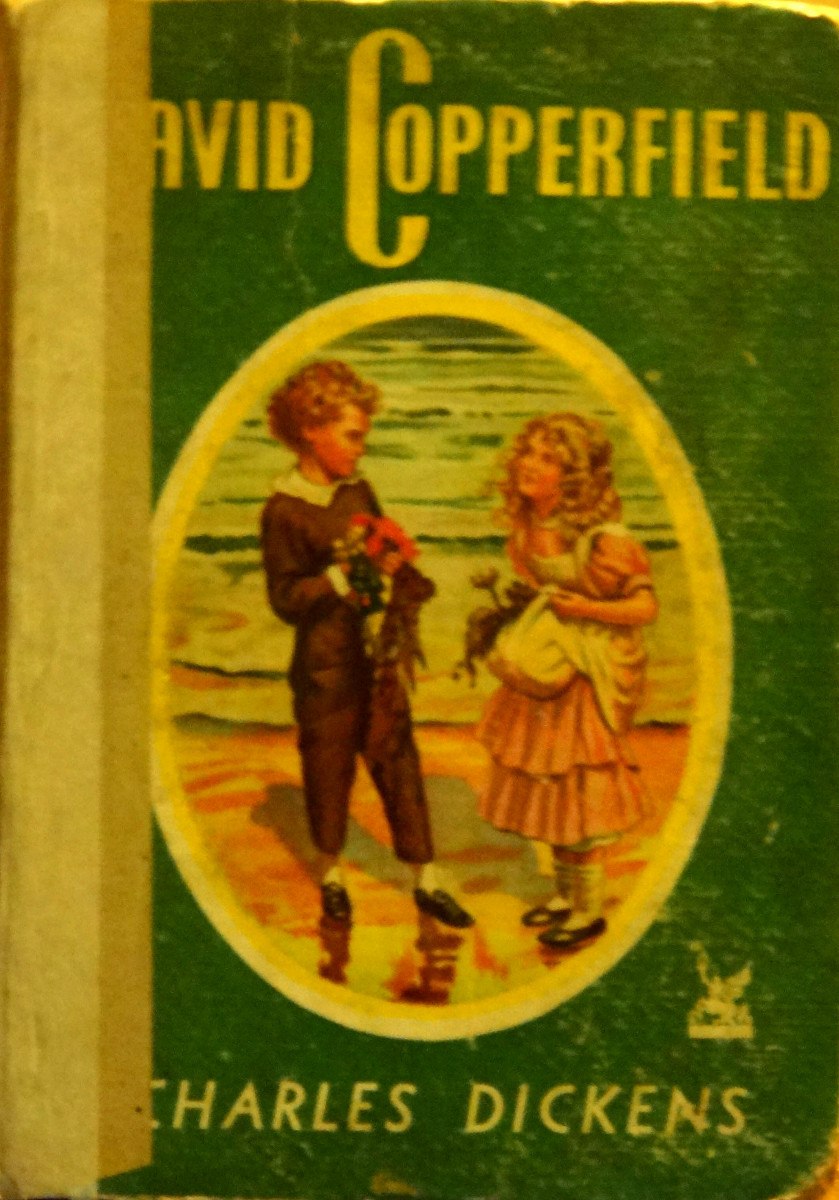
dickens-david-copperfieldAgain, we have a couple classic authors who have influenced literature, sci-fi and fantasy.

Charles Dickens wrote many novels of which I have read David Copperfield and some of his short stories including the A Christmas Carol, as well as a few others. I think I read a part of Great Expectations but I would have to read it again. I have seen so many movie versions of it that the novel would be obscured for me, and I’m not sure I currently own a copy. My David Copperfield is pretty old, I think it is a paperback from the fifties or sixties. One of my finds, and I have read it a few times adding my creases to the ones it had before.

His characters in the stories I have read were often over the top and had at times bizarre sounding names. He also dealt with in his writings, the many ills of the early industrial era, most notably, work houses, debtor’s prison, homelessness, child labor, and poverty. He wrote with a purpose. Bleak House was another of my favorites as it had spontaneous human combustion in it, which alone would make it interesting, but also dealt with the ridiculousness of British bureaucracy and the insane albeit exaggerated, amount of time and money to collect an inheritance from the courts.

Sadly, Dickens experienced a lot of these situations first hand. He had to live with his family in a real debtor’s prison, and he eventually was sold into an apprenticeship doing hard labor as a child so his family could eat. If he didn’t end up with a benefactor, he would not have gotten the education or had the ability to become a journalist, and eventually, a writer.

The modern equivalent of a benefactor would be something like the National Endowment of the Arts in the United States that allows some writers to actually survive working as writers. It is slated to be de-funded by the current administration and seen as a waste of tax payer’s money. I do not know if we have many patrons around that will replace this, but hopefully, some well-to-do philanthropists will step into the void. Otherwise, some potential Dickens will be working two part time jobs and in debt to his eyeballs trying to scrape together money for community college tuition. And just not make it. This kind of thing can make someone believe in their dream and succeed, or give up on it and settle for the day to day grind.

As far as influencing sci-fi, unless we count the spontaneous human combustion in Bleak House, I have to say Dickens has not influenced it much. However, he has considerably influence in fantasy through his direct influence on Mervyn Peake.

Peake’s characters in Gormenghast and Titus Groan have the dickens like quality in their names, and their over the top nature. At the time they were published, and I have editions from this time, fantasy wasn’t really a label. Most published fantasy was directed at children. This was the late sixties, Tolkien was changing the whole market, but it hadn’t happened quite yet. Peake’s novels which were called “Gothic Novels” for lack of a better term, were fantasy as we think of it today but not much like the Tolkien variety or the C.S. Lewis version.

Peake was an atheist. And, he had some shorter works included in my omnibus edition of the Gormenghast novels that use heavy allegory with a lamb used in a sinister way. I would say being that these authors were all British that this was a direct attack toward Lewis, or a rebuttal to Narnia of sorts. The villain in the novels, Steerpike, is based on several characters. Satan for one, but also Steerforth, a character from David Copperfield, and the Phantom of the Opera as well. Steerforth isn’t evil like Steerpike, but, he is reckless, ambitious, and doomed in the end. But, Dickens influence in the characters and their exaggeration has made its mark on the Fantasy genre through Peake.

Jules Verne who was born on February 8th, 1828 is one of the founders of science-fiction. He along with H.G.Wells is often given credit for making it a viable genre. 20,000 Leagues Under the Sea introduces Captain Nemo for the first time, one of my favorite characters. Nemo is Latin for no one and is an alias for a man from India. That conjures a  bit of a different image of the character when you consider his background, he experienced colonialism first hand, at least in theory. Verne leaves Nemo very mysterious, the story is told from the viewpoint of a visitor or prisoner on the Nautilus, and Nemo is left an enigma. He is re-used in Mysterious Island as well. Around the World in 80 Days is another Verne classic. The fact that he used submarines before they were a viable technology, which at the time they were thought a far fetched idea, is what science-fiction would be known for in the future: attempting to predict the future.

1984 is a good example of this, attempting to show what a future totalitarian state may be like, also Brave New World, and most dystopia novels you may find. Now, this is being considered a viable sub-genre with the recent surge in popularity that it is enjoying due to the fear of the future many have right now. I would say venturing into this genre right now would be a good idea, although soon there may be an over abundance in this category like Vampire Fiction experienced some years back after Meyer’s Twilight success.

To  sum up, both writer’s were ahead of their time, dealing with possible technology on one hand, and using writing to detail society’s issues with the other, and both heavily influenced future genres that had not existed when they were writing, at least as we think of them today. I would easily add any book from either of these authors to my collection without a second thought. They are both easy to read given they were writing in the nineteenth century, and they both hold up today unlike many of their contemporaries.